
Materials
Leather in Safety Gloves: Cowhide, Goatskin and Split Explained
July 2026
4 min read

Leather is the heart of a protective glove, and not all leather is equal. The type and cut determine how a glove balances heat resistance, durability, grip and dexterity — which is why True Forge selects material by task rather than by cost.
Full-grain vs split
Full-grain leather is the outer layer of the hide — strong, abrasion-resistant and durable, ideal where wear and heat are highest. Split leather comes from the lower layers; it’s more economical and breathable, and works well for cuffs, backs and lighter-duty areas. Many gloves combine both, placing full-grain where protection matters most.
Cowhide — the workhorse
Cowhide is durable, heat-resistant and widely used across welding and heavy handling. It stands up to sustained abrasion and delivers dependable all-round protection, making it the default for demanding environments.
Goatskin — dexterity and feel
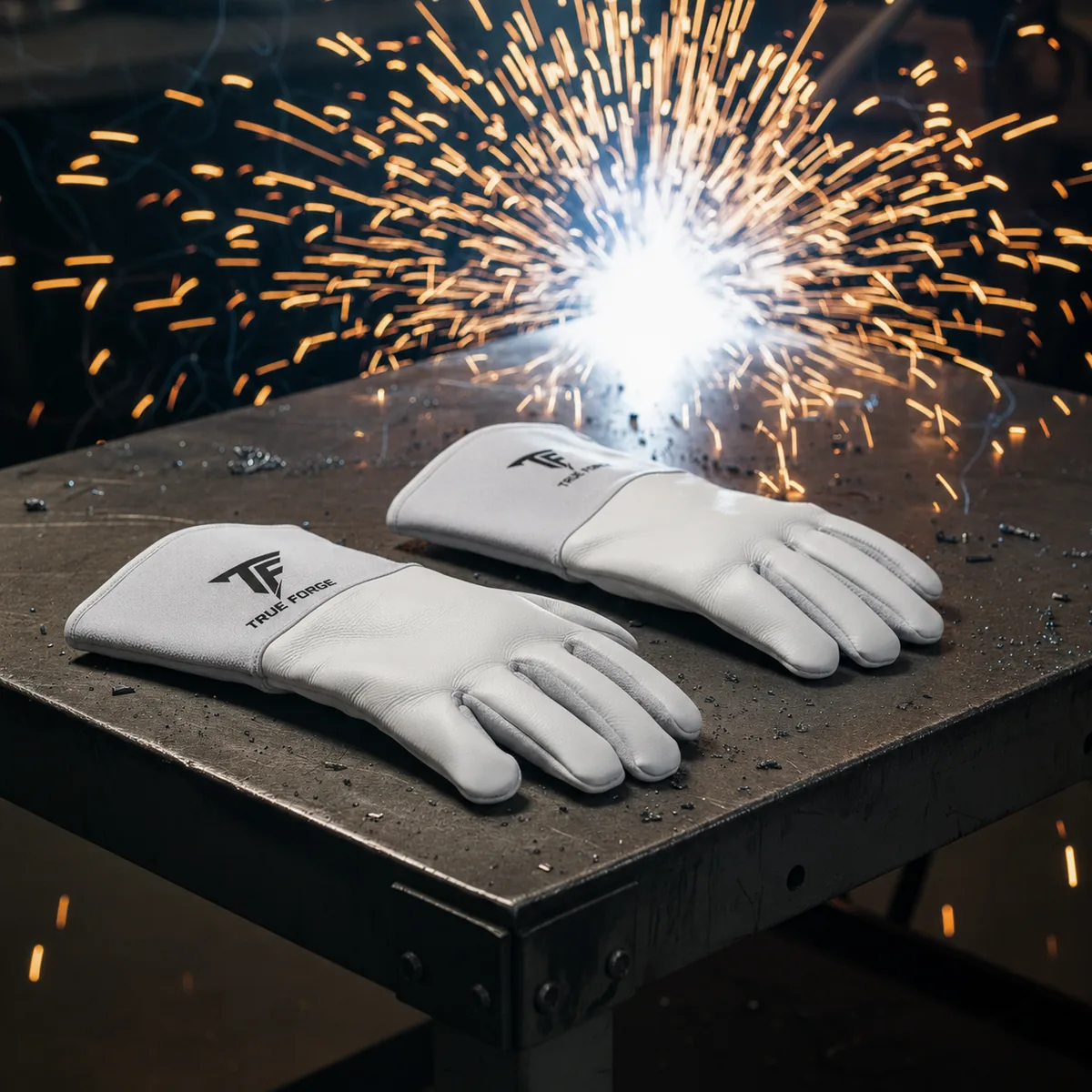
Goatskin is naturally strong yet supple, offering excellent tactile feedback. Where a task needs fine control — TIG welding, detailed assembly — goatskin gives the dexterity heavier leathers can’t.
Choosing the right leather isn’t about the most expensive option — it’s about the right material in the right place. That deliberate selection is what keeps True Forge gloves protective and comfortable enough to wear all shift.
Request a Quote
Let’s build something safer
Tell us your product, quantity and industry — our team will get back to you promptly.